
Martin Luther King, Jesse Jackson and Black Genocide
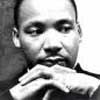 Today we commemorate the life of Martin Luther King, Jr., Baptist minister and preeminent leader of the American civil rights movement. To summarize his accomplishments:
He led the Montgomery Bus Boycott (1955 - 1956) and helped found the Southern Christian Leadership Conference (1957), serving as its first president. His efforts led to the 1963 March on Washington, where King delivered his “I Have a Dream” speech. Here he raised public consciousness of the civil rights movement and established himself as one of the greatest orators in U.S. history. In 1964, King became the youngest person to receive the Nobel Peace Prize for his efforts to end segregation and racial discrimination through civil disobedience and other non-violent means.
In a profile of the "100 Most Important People of the Century", Time magazine explains why we as Americans should be grateful for the prophetic witness of Dr. King:
Three decades after King was gunned down on a motel balcony in Memphis, Tenn., he is still regarded mainly as the black leader of a movement for black equality. That assessment, while accurate, is far too restrictive. For all King did to free blacks from the yoke of segregation, whites may owe him the greatest debt, for liberating them from the burden of America's centuries-old hypocrisy about race. It is only because of King and the movement that he led that the U.S. can claim to be the leader of the "free world" without inviting smirks of disdain and disbelief. Had he and the blacks and whites who marched beside him failed, vast regions of the U.S. would have remained morally indistinguishable from South Africa under apartheid, with terrible consequences for America's standing among nations. How could America have convincingly inveighed against the Iron Curtain while an equally oppressive Cotton Curtain remained draped across the South?Some additional resources on Dr. King:
- The Martin Luther King Jr. Papers Project at Stanford University.
- There is no understanding Dr. King without recognizing the deep Christian faith which fueled his campaign for civil rights. Those interested will certainly appreciate Strength To Love, a fine collection of his best sermons.
- Catholic Church remembers MLK, Michael Joseph @ Vox Nova commemorates today with two passages from Church documents on his life and work.
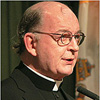 Remembering Martin Luther King Jr., by Fr. Richard J. Neuhaus. Personal memories of the civil rights leader interspersed with a critical review of an autobiography of Dr. King by Marshall Frady. First Things 26. Oct. 2002:
. . . In New York, a few months before his death, we had lunch, together with Young and Al Lowenstein, an activist who would later be murdered by one of his protégés, and King turned philosophical about the limits of political change. It was a leisurely and convivial lunch. The restaurant had been alerted that “the famous Dr. King” was coming, and the waiter assumed that the white man in the clerical collar must be he, and so throughout the lunch addressed me as “Dr. King.” It both astonished and amused that one of the most famous people in the world was not recognized, and King enjoyed it immensely, taking the opportunity to smoke cigarettes throughout lunch, a regular habit that he usually indulged only in private. Among many other things, we talked about the abiding wisdom of Reinhold Niebuhr and the need to recognize the distinction between the morally imperative and the historically possible, agreeing also on the moral imperative to press the historically possible. It was the last time I saw him. . . .
It is well worth reading, addressing the positive and negative aspects of Dr. King's life and legacy, including his unfortunate sexual philandering:
Then and now, I think it possible and necessary to make a crucial, albeit not unambiguous, distinction between the very broken earthen vessel and the treasure of truth that vessel contained and so powerfully communicated.
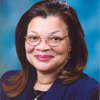
And what of Dr. King's legacy today? -- Alveda King, neice of Dr. King, believes that civil rights leaders have by and large neglected their commitment to the least among us: (Illinois Leader January 15, 2004):
"I can remember the days when Jesse Jackson was pro-life, and he went across the country calling abortion genocide. I don't understand how he took that turn or why. I personally believe that any leader, especially African-American leaders -- and I can say this because I'm African-American -- should be compelled to remember the days of slavery and to remember their responsibility toward the children we call the unborn. They are real people too, and they actually have civil rights."As Mrs. King put it in an essay on her website: How can the “Dream” survive if we murder the children?:
My grandfather, Dr. Martin Luther King, Sr., once said, “No one is going to kill a child of mine.” Tragically, two of his grandchildren had already been aborted when he saved the life of his next great-grandson with this statement. His son, King once said, “The Negro cannot win as long as he is willing to sacrifice the lives of his children for comfort and safety.” How can the “Dream” survive if we murder the children? Every aborted baby is like a slave in the womb of his or her mother.
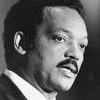 In a 1977 essay for the Right to Life News, civil rights leader and colleage of Martin Luther King, Jr. Jesse Jackson stated that "How we respect life is the over-riding moral issue". Speaking at the March for Life, he mused: "What happens . . . to the moral fabric of a nation that accepts the aborting of the life of a baby without a pang of conscience."
Jesse Jackson would later do an "about face": shortchanging his moral conviction for a chance at the Democratic nomination for president in 1984 and 1988 (See Jackson's Reversal On Abortion (Washington Post May 21, 1988). He later became something of a "spiritual advisor" to President Bill Clinton and -- not suprisingly -- announced his support for Democratic nominee Barack Obama.
BlackGenocide.com is a project of the African-American pro-life ministry Learn ("Life Education And Resource Network"). Founded by Rev. Johnny Hunter, it "publishes extensive data and research information on the racist origins of Planned Parenthood, it's founder, Margaret Sanger, and the American Eugenics movement." BlackGenocide.com
seeks to bring attention of the Black community to the horror of abortion and what is in their mind the paramount "civil rights" issue of today (often butting heads with the NAACP, which has stubbornly refused to acknowledge the need to reduce abortion within the Black community). Consider these horrifying statistics:
- Between 1882 and 1968, 3,446 Blacks were lynched in the U.S. That number is surpassed in less than 3 days by abortion.
- 1,452 African-American children are killed each day by the heinous act of abortion.
- 3 out of 5 pregnant African-American women will abort their child.
- Since 1973 there has been over 13 million Black children killed and their precious mothers victimized by the U.S. abortion industry.
In his "Letter from a Birmingham Jail", Martin Luther King said, "The early church brought an end to such things as INFANTICIDE." What would Martin Luther King say to the church today?The Rev. Jesse Jackson once said:
"That is why the Constitution called us three-fifths human and then whites further dehumanized us by calling us 'niggers'. It was part of the dehumanizing process. The first step was to distort the image of us as human beings in order to justify that which they wanted to do and not even feel like they had done anything wrong. Those advocates of taking life prior to birth do not call it killing or murder, they call it abortion. They further never talk about aborting a baby because that would imply something human. Rather they talk about aborting the fetus. Fetus sounds less than human and therefore abortion can be justified".
Jackson's massive flip-flop on the abortion issue is further proof that his political future is far more important to him than are his principles.
With 1/3 of all abortions performed on Black women, the abortion industry has received over 4,000,000,000 (yes, billion) dollars from the Black community.


 Posts
Posts


 Following the 2004 Presidential election, we've expanded our discussion to cover the public policy decisions of Catholics in public service on both sides of the political divide.















|